
%403x.png)




Scale Isn’t Growth — It’s Pressure
Scaling exposes everything you didn’t plan for.
It reveals shortcuts, brittle logic, and unmeasured assumptions.
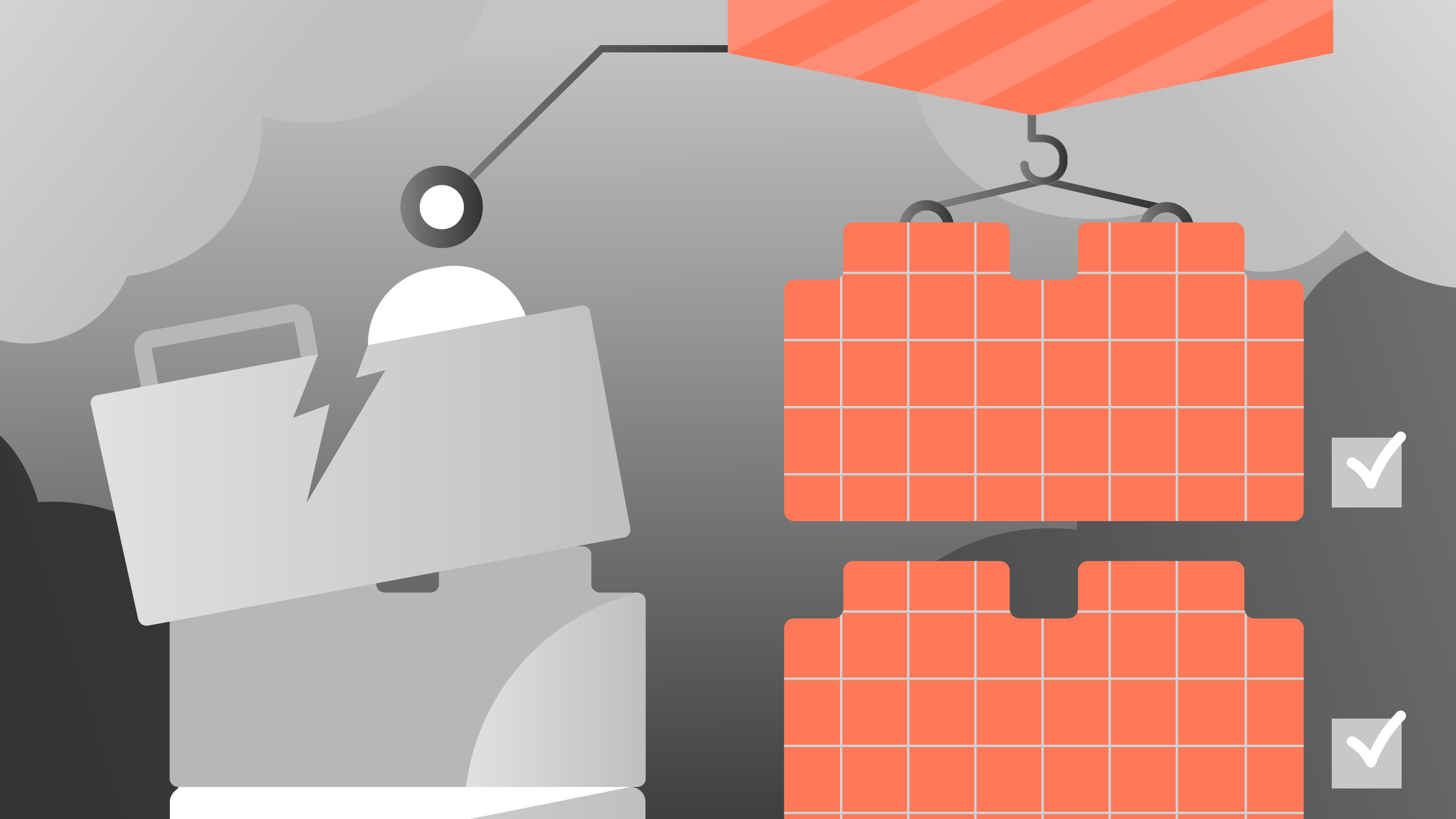
At Buildrbrand, we call this the stress horizon — the invisible threshold where traffic, transactions, or user behavior change so rapidly that the system starts to deviate from design intent.
Most teams hit that horizon and react. We engineer for it before it happens.

The 4 Failure Zones of Scaling
After auditing over 100+ high-volume platforms across eCommerce, fintech, and entertainment — the pattern is always the same. Platforms fail at one or more of these four layers:
Architecture Debt – Monolithic stacks pretending to be modular.
Database Contention – Queries that scaled linearly instead of exponentially.
Concurrency Conflicts – Race conditions hiding under optimistic locks.
Inefficient Edge Strategy – Every request hitting the core instead of the cache.
Each alone can tank performance. Together, they’re catastrophic.
The Framework That Doesn’t Break
We built what we call the Zero Bottleneck Execution™ Framework — a scaling methodology that prioritizes flow over features. Instead of adding layers of tooling, we re-engineer the path data takes through a platform:
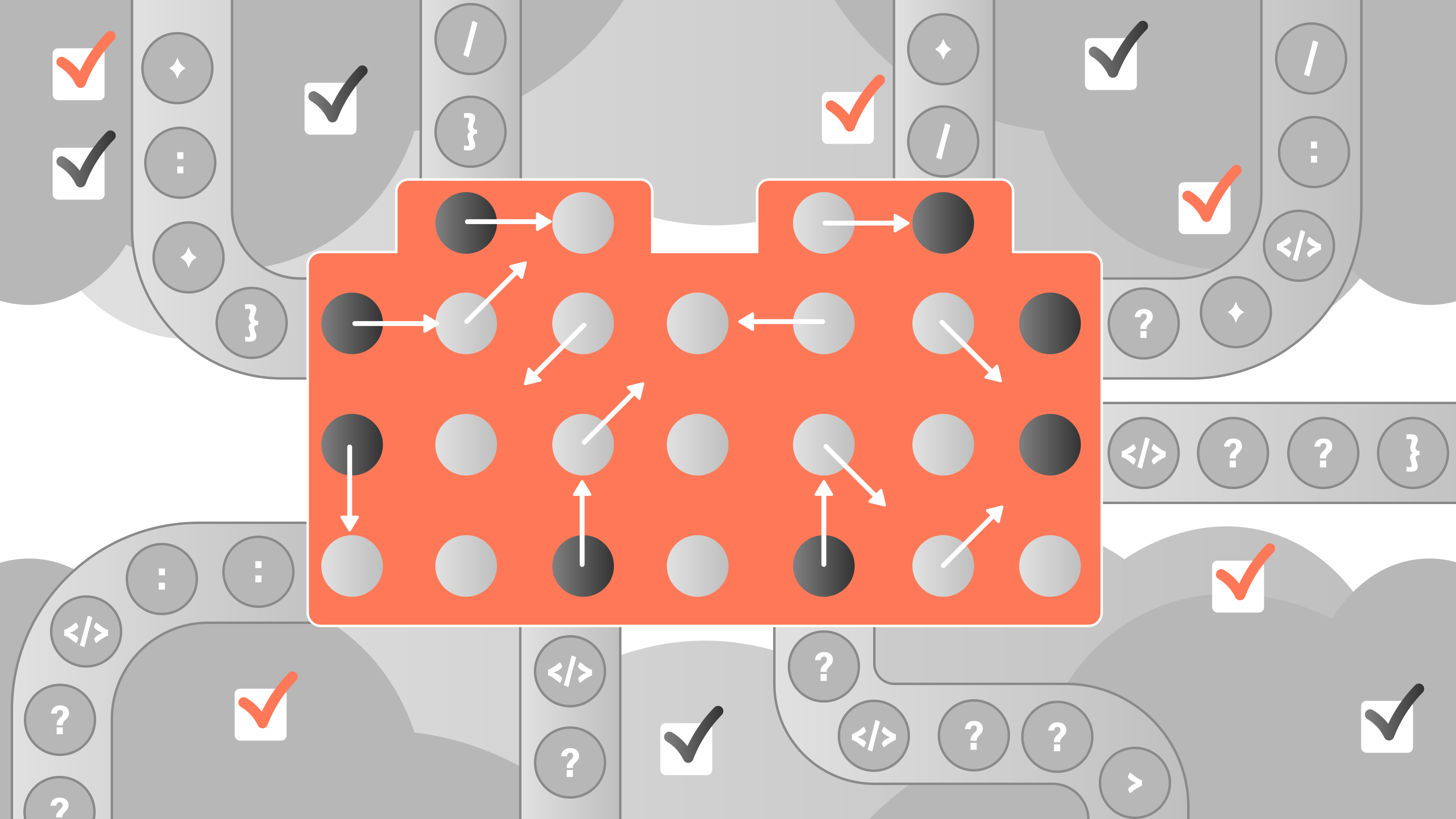
Predictive Load Distribution – Systems automatically rebalance compute loads based on real-time velocity.
Asynchronous I/O Core – Every request operates independently, ensuring no queue buildup during concurrency spikes.
Adaptive Query Mapping – Databases re-prioritize indexes dynamically based on frequency and cardinality shifts.
Edge-First CDN Logic – 80%+ of global traffic is served at the edge, before it ever touches the origin.
It’s not magic. It’s architecture that learns.
Real-World Proof
Across Buildrbrand deployments in 2024–2025, our clients saw:
0.07s average global API latency under 5x normal traffic.
99.999% uptime during synthetic load testing from 42 regions.
40% reduction in scaling costs post-Zero Bottleneck implementation.
These aren’t theoretical optimizations — they’re outcomes of a system designed for real-world chaos.
Why Teams Still Miss It
Because scaling problems rarely look like scaling problems.
They look like “slow dashboards,” “timeouts,” or “failed payments.”
By the time the issue surfaces, the architecture is already buckling under pressure.
Debugging becomes firefighting. Monitoring becomes manual. And innovation halts because the platform can’t be trusted.
Our rule: if you’re debugging during a scale event, you already lost.
Buildrbrand’s Philosophy: Systems That Outlast Traffic
Every Buildrbrand deployment — from fintech dashboards to AI systems — is built around one principle:
You don’t scale by adding servers. You scale by removing friction.
That means no patch-on-patch “fixes.” No waiting for breaking points.
Just clean, resilient, composable architecture designed for sustained acceleration.
The result? Platforms that evolve under pressure instead of collapsing from it.
The Takeaway
Most platforms break because they chase speed before stability.
We build speed through stability.
Because when the next traffic surge comes, the question isn’t “Can your system handle it?”
It’s “Can it thrive in it?”


