
%403x.png)




The Reality of Attack Surfaces
When you operate at scale, everything becomes an attack surface.
An API key leaked in a Git commit.
A deployment rollback that reverts auth logic.
A webhook endpoint without signature validation.
A caching layer that serves stale sessions after logout.These aren’t hypotheticals.
They’re the weak points attackers find first — the ones your monitoring software doesn’t even know exist yet.

Lesson 1 — Visibility Is the New Firewall
You can’t defend what you can’t see.
Traditional systems monitor endpoints and requests. But modern attacks exploit flows — the relationships between microservices, payload timings, and user behavior patterns.
We started tracking behavioral intent, not just requests.
It’s how Brute™, our defense engine, learned to pre-empt attacks before they even execute.
By modeling intent instead of activity, we moved from reactive security to predictive defense.
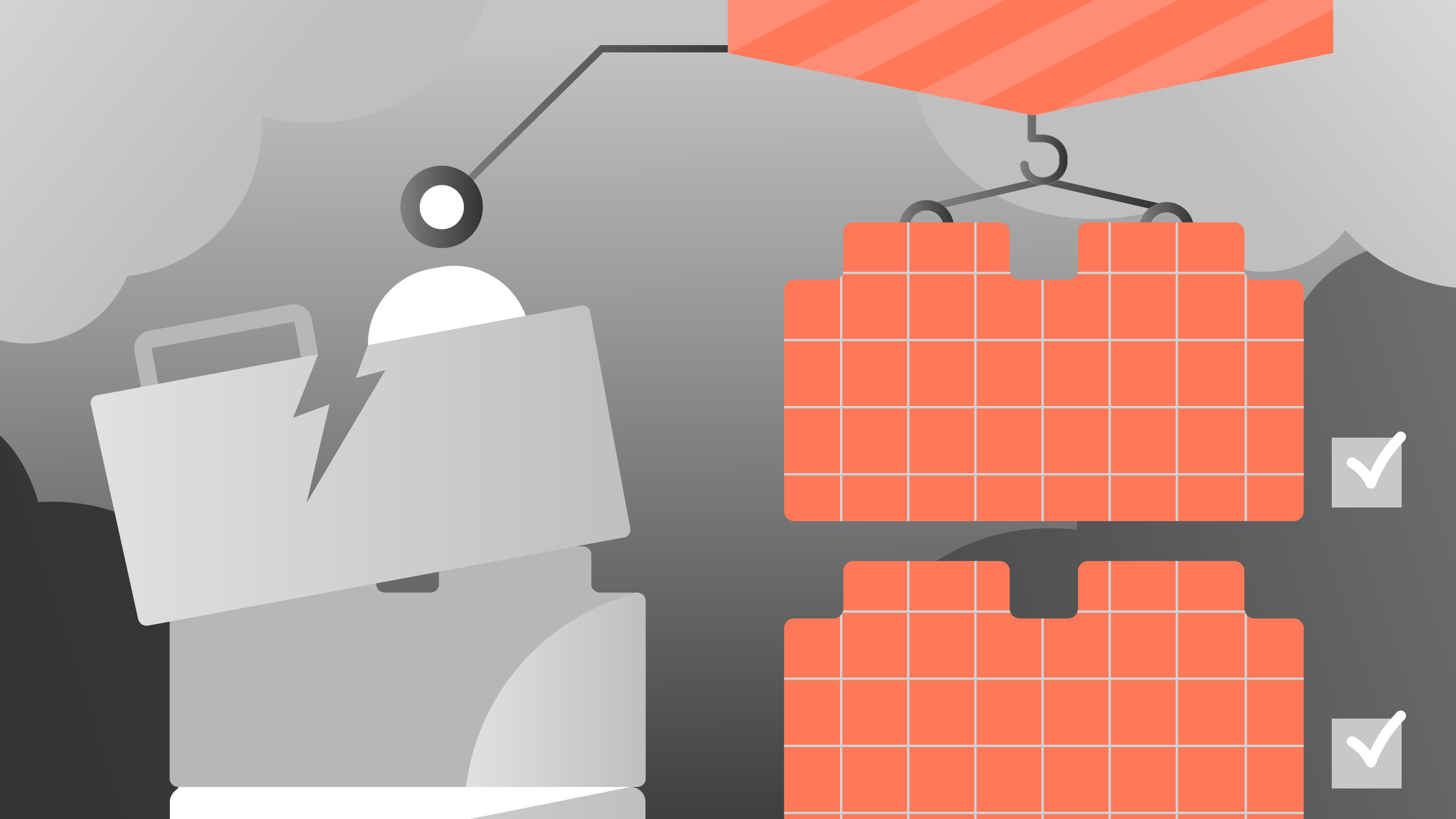
Lesson 2 — Automation Isn’t the Enemy
Most teams fear automation because they’ve seen it break production.
But the real danger is not automating fast enough.
Our incident response framework is designed around autonomous recalibration — when a threat spikes, thresholds adjust in real time.
No human delay. No waiting for review tickets.
By the time you’d finish writing the postmortem, the system has already rewritten its own defenses.
Automation isn’t replacing humans — it’s preserving them for the moments that matter.
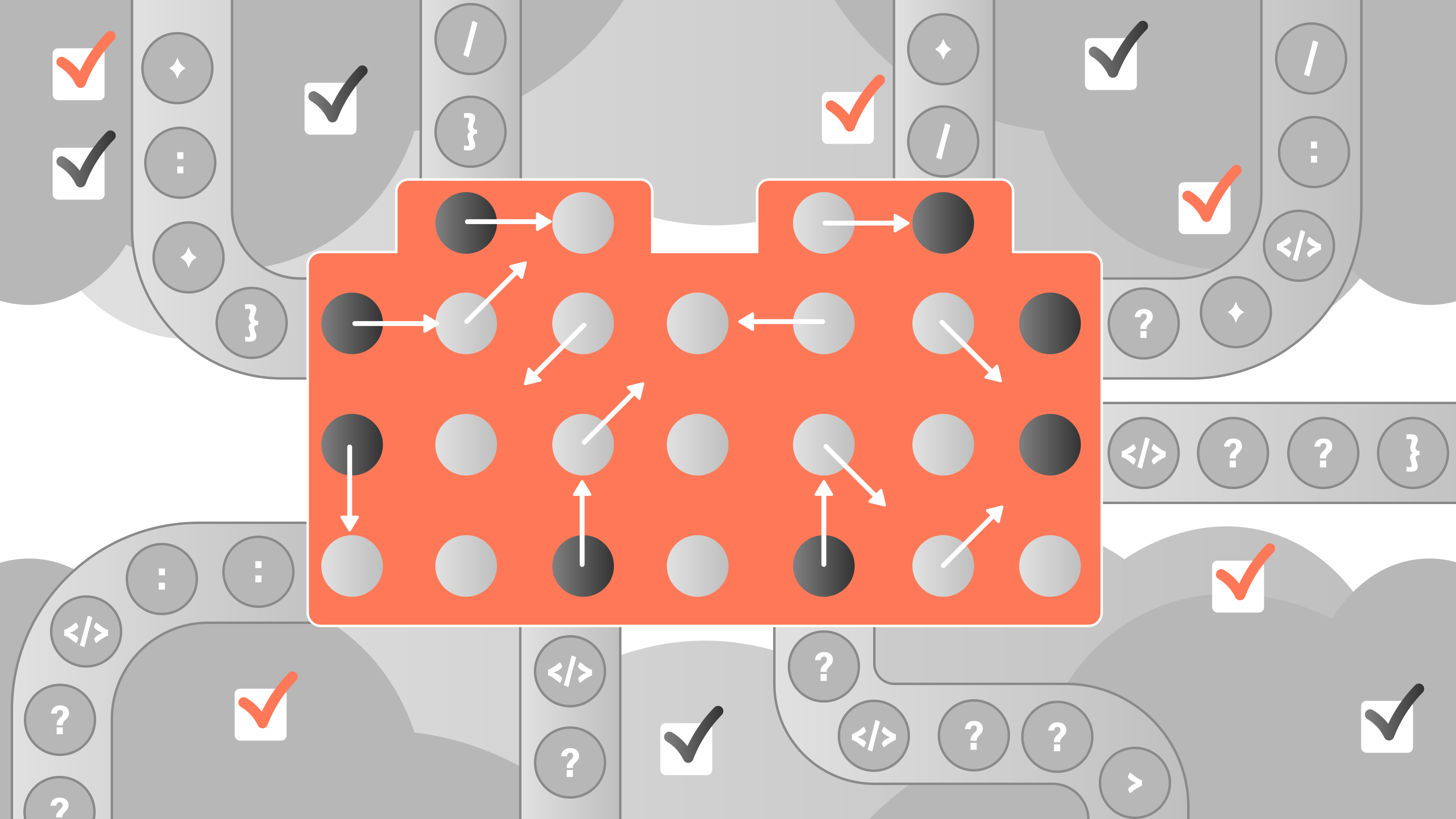
Lesson 3 — Stress-Test Everything (Then Break It Yourself)
Before attackers ever reached our clients, we had already done it ourselves.We simulate:SQLi and payload injections under global concurrency
Brute-force auth floods mimicking distributed botnets
Synthetic DDoS surges at 10x expected traffic levels
Spoofed session signatures across serverless endpoints
When your system has already been hit by your own red team 10,000 times, the real attacks start feeling… unoriginal.In 2024 alone, across 67M+ requests defended, not a single Buildrbrand deployment experienced a successful breach.
Why Teams Still Miss It
Because scaling problems rarely look like scaling problems.
They look like “slow dashboards,” “timeouts,” or “failed payments.”
By the time the issue surfaces, the architecture is already buckling under pressure.
Debugging becomes firefighting. Monitoring becomes manual. And innovation halts because the platform can’t be trusted.
Our rule: if you’re debugging during a scale event, you already lost.
Buildrbrand’s Philosophy: Systems That Outlast Traffic
Every Buildrbrand deployment — from fintech dashboards to AI systems — is built around one principle:
You don’t scale by adding servers. You scale by removing friction.
That means no patch-on-patch “fixes.” No waiting for breaking points.
Just clean, resilient, composable architecture designed for sustained acceleration.
The result? Platforms that evolve under pressure instead of collapsing from it.
The Takeaway
Most platforms break because they chase speed before stability.
We build speed through stability.
Because when the next traffic surge comes, the question isn’t “Can your system handle it?”
It’s “Can it thrive in it?”


